Product line
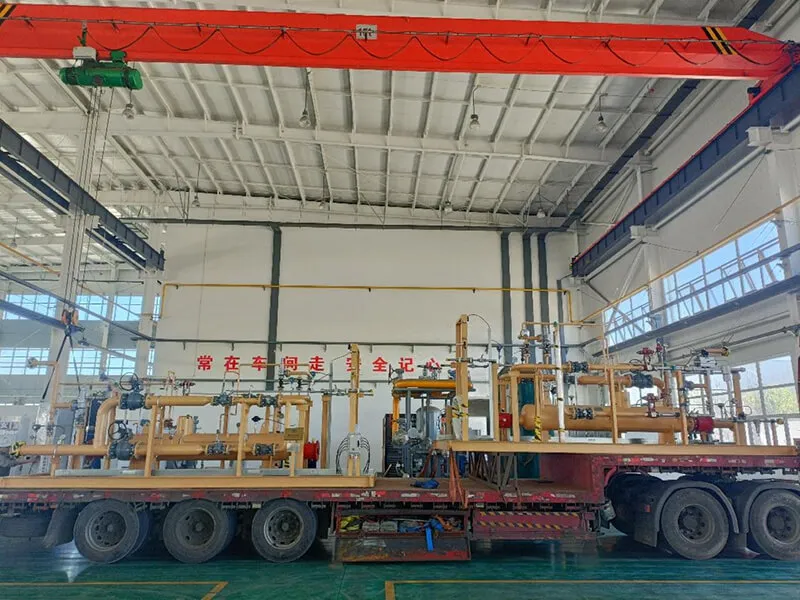
CNG pressure reducing skids
High-pressure natural gas from tube trailers or storage, reduced to a stable, controllable outlet — with filters, heaters, safety valves and telemetry integrated on the skid.
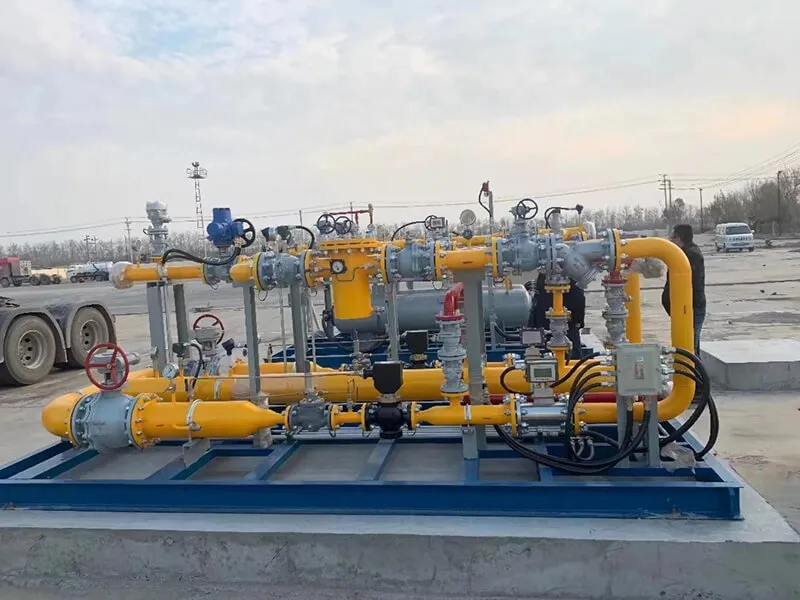
Pre-engineered and integrated
The skid transforms natural gas at up to 25 MPa into stable, controllable flow. It is a pre-engineered modular design, fully integrated with gas filters, heaters, safety valves and telemetry systems.
Pressure stability and protection
- Multi-stage regulation holding outlet pressure within ±0.5% even with 30% input fluctuation
- Automatic emergency shutdown (ESD) triggered in under 2 seconds
- Industrial IoT connectivity (Modbus / OPC UA) for remote monitoring and analytics
Applications
- Industrial gas supply where no pipeline network exists: High-pressure stored and transported natural gas is heated and pressure-reduced before supply to industrial users, matching the inlet conditions of the gas-consuming equipment.
- Off-grid gas-fired power generation: Provide fuel to generating equipment far from the pipeline network, with pressure reduction and gas source systems configured according to the unit's gas consumption and operating time.
- Emergency supplementary supply for urban gas: Mobile CNG sources are pressure-reduced and connected to a designated supply system to cover temporary gas source gaps.
- Interim supply during pipeline network construction: Provide phased natural gas supply until the permanent gas source is connected, with interfaces planned in line with the subsequent connection scheme.
- Supplementary supply at peak demand: CNG gas source and pressure reduction capacity are configured for short-term peak loads, and the sustainable supply time is calculated at the same time.
- Industrial boilers and process heating: Supply natural gas that meets the requirements of combustion equipment, with the heating method and outlet parameters selected according to on-site energy conditions.
Design data
| Max. inlet pressure | 25 MPa |
|---|---|
| Flow range | 50–10,000 Nm³/h |
| Outlet pressure stability | ±0.5% with 30% inlet fluctuation |
| Emergency shutdown | < 2 s |
| Typical outlet (LNG station duty) | 0.8–1.2 MPa |
| Materials | SS316L vessels, Inconel valves |
| Connectivity | Modbus / OPC UA |
Reference project: 3,500 Nm³/h CNG pressure regulating skid in Malaysia, gas source CNG tube trailer.
FAQ
Why does CNG pressure reducing equipment need heating?
Significant cooling may occur when high-pressure natural gas is pressure-reduced. The heating requirement should be calculated from gas quality, pressure differential, flow rate and the required outlet temperature.
Can the maximum gas supply rate be maintained until the trailer is almost empty?
Not necessarily. A falling inlet pressure may affect supply capacity, so the available flow should be checked at both high and low inlet pressure during sizing.
How is the heating method chosen?
Electric heating, hot water circulation or steam heating can be evaluated according to site conditions. Heat source availability, required heat load, operating conditions and maintenance requirements should be compared.
How can continuous supply be maintained during trailer changeover?
A standby gas source, switching method and control interface should be designed according to the supply continuity requirement, and the effect of the switching process on downstream pressure and flow should be verified.
How should equipment materials be determined?
Materials for the pressure-bearing piping, heat exchanger, valves, frame and enclosure should each be determined separately. Material selection should consider gas quality, design pressure, minimum temperature and the installation environment.
How should the outlet temperature be determined?
The target value should be set according to the requirements of the downstream equipment, and the heating capacity should be verified under minimum ambient temperature, varying inlet conditions and maximum load.
Gallery
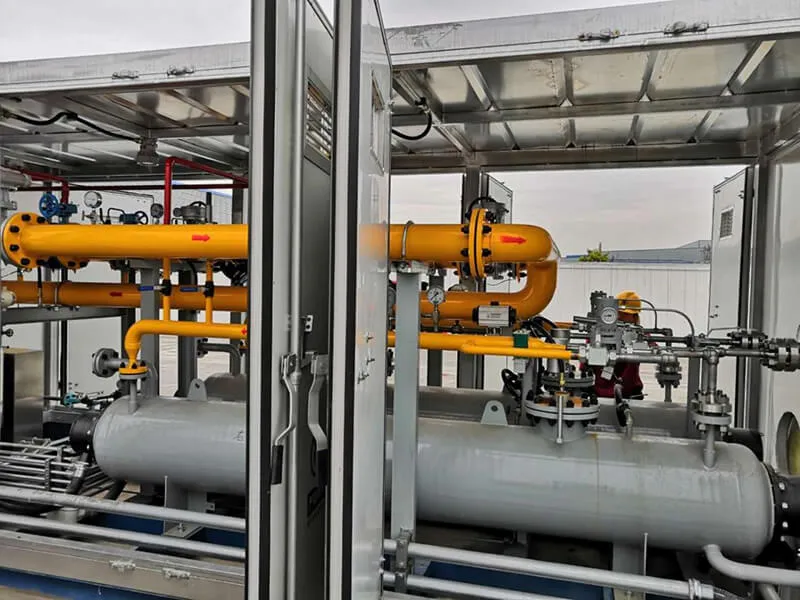
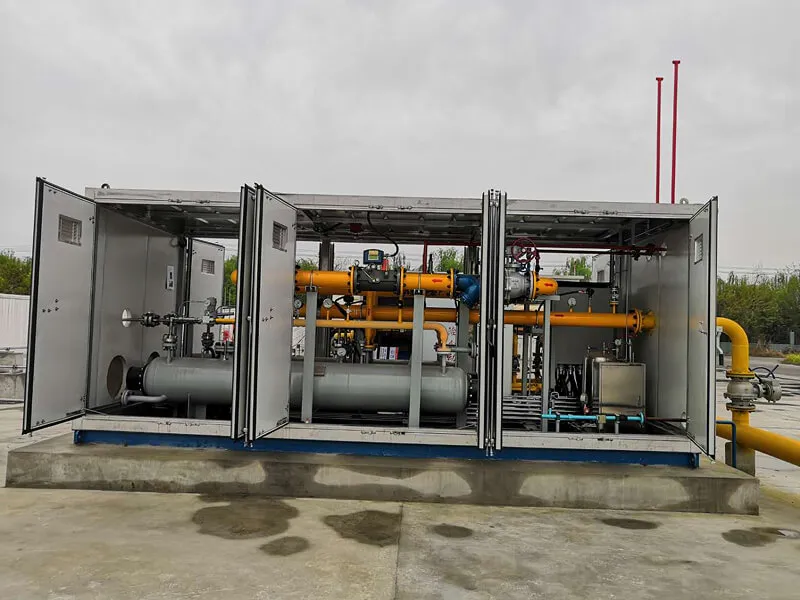
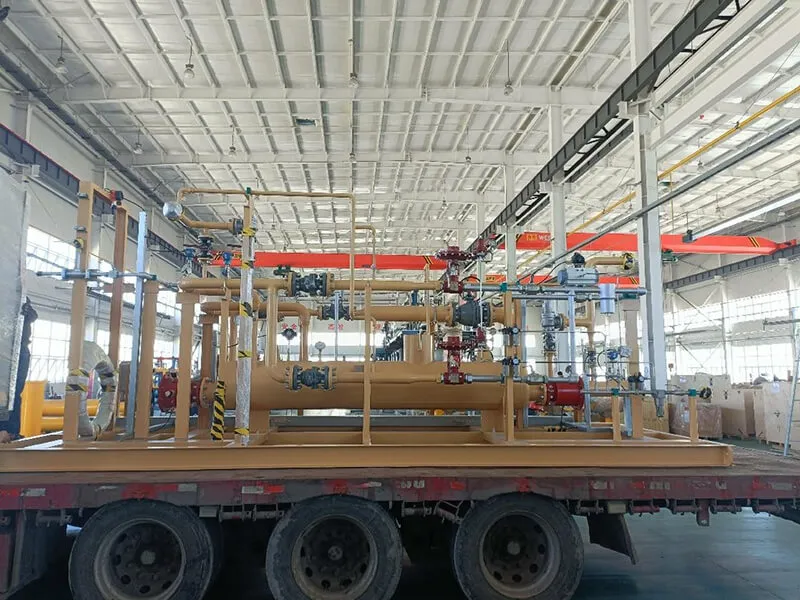
Equipment photographs
Projects
Where this equipment is running
Tell us your gas, flow and pressure.
We come back with a configuration and quotation basis for your conditions.