Product line
Gas blending and calorific value control systems
Blend natural gas, LPG, hydrogen, nitrogen, air and industrial associated gases at the ratio you need — 0–100% — while holding calorific value to ±1% (±0.5% in key scenarios).
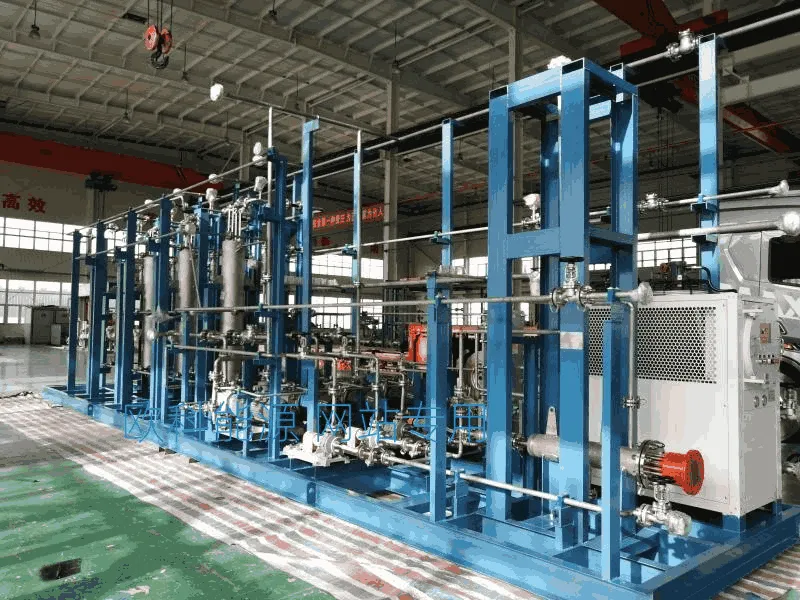
Precise control, diversified gas sources
- Independently developed dynamic blending algorithm with high-precision sensing: calorific value accuracy ±1%, improvable to ±0.5% in key scenarios
- Free combination of natural gas, LPG, hydrogen, ammonia, nitrogen, air and industrial associated gases (coke oven gas, blast furnace gas and similar); mixing ratio adjustable from 0 to 100%
- Where LNG import dependence is high, LPG and air can be mixed to replace natural gas — see the SNG project in Southeast Asia
Hydrogen blending
Our approach advocates a hydrogen blending ratio of ≤20% and transmission through the existing natural gas network. The company holds a Chinese invention patent for a hydrogen energy gas blending device and a South African patent for a natural gas hydrogen-doped mixer (see Certifications).
Technical features
- Intelligent control platform: automatic control and switching of multiple gas sources, real-time feedback, dynamic adjustment of blending ratio against source fluctuation and load change
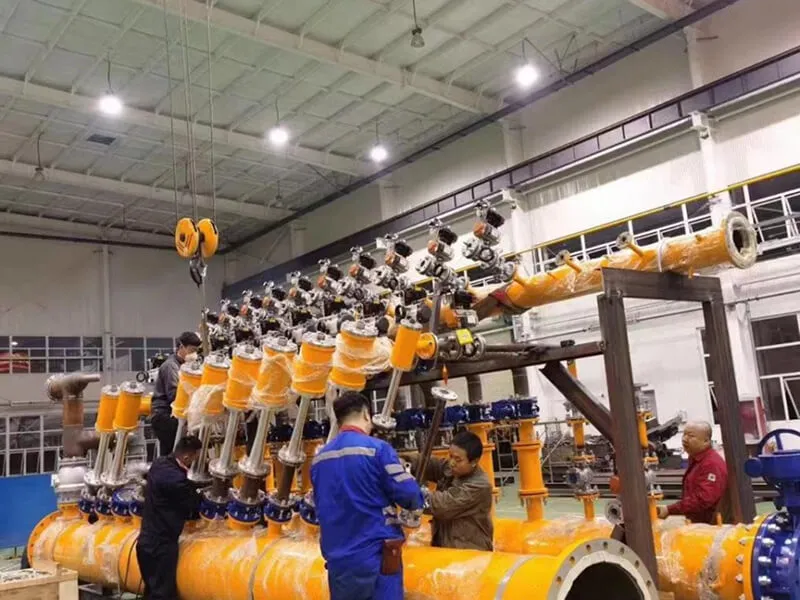
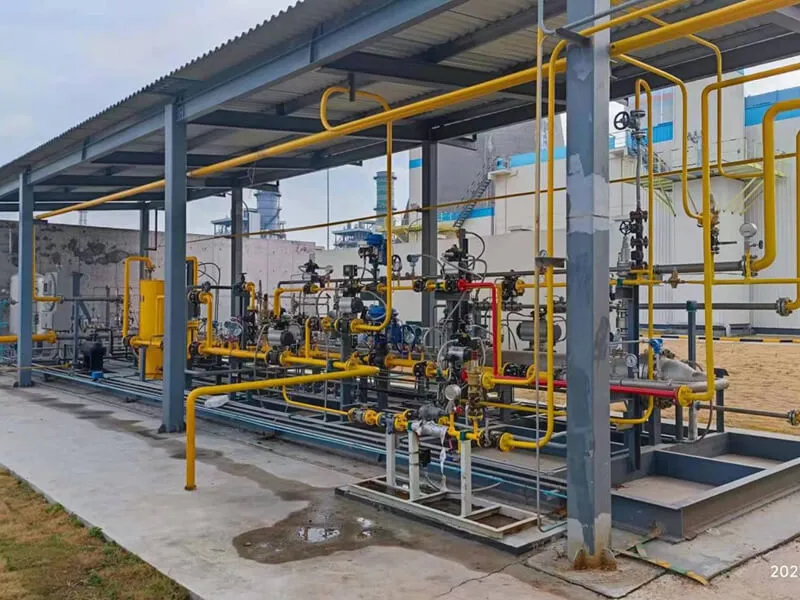
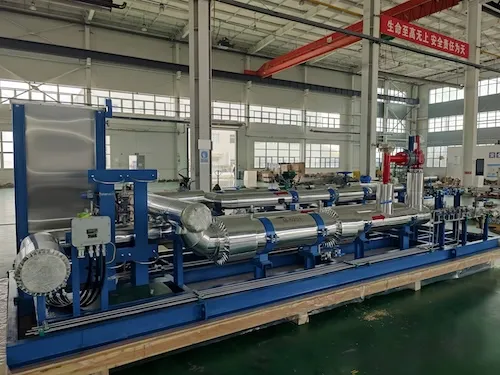
- Modular, skid-mounted design for rapid deployment on new projects and existing network renovations
- Safety redundancy: multiple gas-concentration monitors and emergency cut-off protection
Applications
- Backup fuel supply for natural gas: A substitute gas is produced by mixing LPG with air and, once adaptation of the end-use combustion equipment has been confirmed, is used for backup supply.
- Supplementary supply at seasonal peaks: Blending capacity is configured according to peak gas consumption and the target gas quality, to supplement a shortfall in the main gas source.
- Interim fuel before the pipeline network is connected: Before permanent natural gas supply is established, the use of a mixed gas is evaluated, and the conditions for the subsequent fuel changeover are determined in advance.
- Calorific value enhancement of steel mill blast furnace gas: Low-calorific-value gas is blended with a higher-calorific-value source so that the fuel quality matches the requirements of downstream furnaces.
- Calorific value adjustment of industrial by-product gas: For fluctuations in source composition and load, detection and ratio adjustment are configured to meet the target calorific value and flow requirements.
- Hydrogen–natural gas blending projects: Blending is carried out at a confirmed blending ratio and under confirmed system compatibility conditions, for demonstration, validation or designated gas utilization projects.
Delivered in China
- Steel industry: coke oven and blast furnace gas blended with natural gas
- Chemical park: coastal LNG receiving station with a blending system for dynamic LPG/LNG peak regulation
Design data
| Calorific value accuracy | ±1% (±0.5% in key scenarios) |
|---|---|
| Mixing ratio | 0–100%, adjustable |
| Hydrogen blending | ≤20% |
| Reference: Ghana LPG mixing skid | Max 20,000 kg/h (propane 6,000 + butane 14,000), 0.5–0.6 MPa working pressure |
| Reference: Southeast Asia SNG | 6,000 Nm³/h, LPG + air, 0.2 MPa, dynamic flow-proportional mixing |
Reference rows are taken from the project pages.
FAQ
Does a fixed mixing ratio keep the calorific value stable?
Not necessarily. When the composition of the feed gas changes, the calorific value of the mixed gas may change even if the flow ratio is unchanged. Ratio control, calorific value feedback or Wobbe index control can be selected according to the control objective.
If the calorific value of an LPG–air mixture is close to that of natural gas, can it directly replace natural gas?
Combustion interchangeability must also be evaluated, including the Wobbe index, supply pressure and compatibility of the end-use combustion equipment. A similar calorific value alone cannot be the basis for substitution.
Why must the conditions of each gas source be provided for sizing?
The composition, flow, pressure and temperature of each source together determine the blending range and control requirements. The expected range of variation in these conditions should also be stated.
Can one system be used for any combination of gases?
No. LPG–air, hydrogen–natural gas and industrial gas blending have different medium characteristics, and the materials, detection methods, control logic and safety protection must be confirmed separately for each.
How is the hydrogen blending ratio in natural gas determined?
It should be determined from the compatibility of the pipeline network materials, metering devices and end-use equipment, and from the project requirements. The ratio used in one project cannot be applied directly to another system.
How is the scope of supply and acceptance for a blending system confirmed?
The gas source conditions, outlet quality targets, control method, sampling and analysis configuration, abnormal-condition interlocks and interfaces should be defined, and the performance test conditions and acceptance method agreed.
Gallery
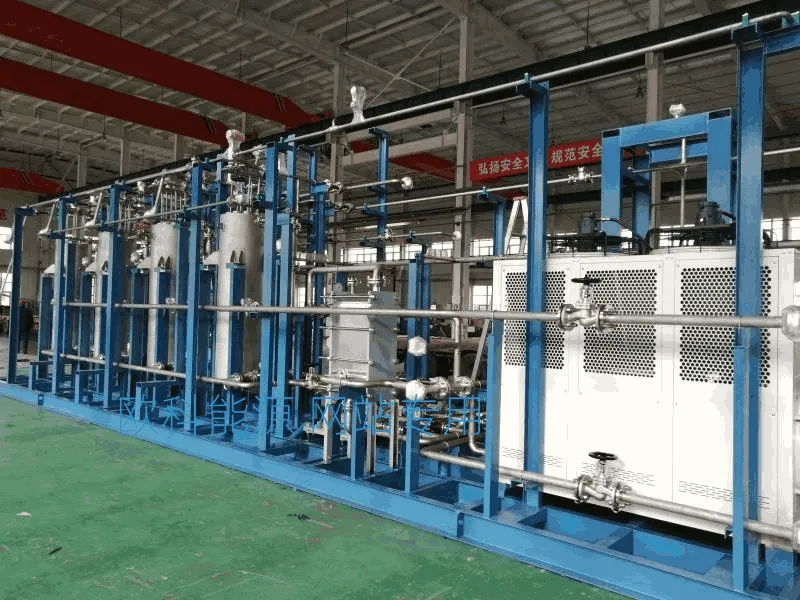
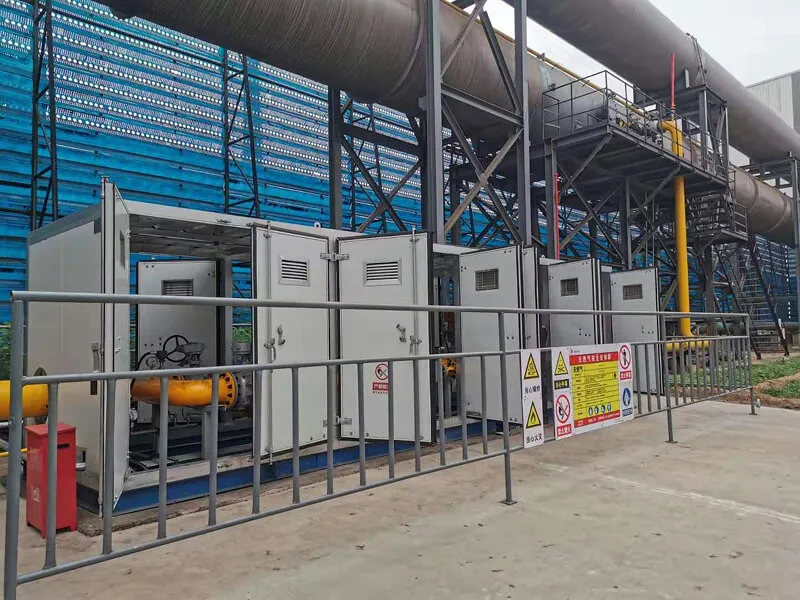
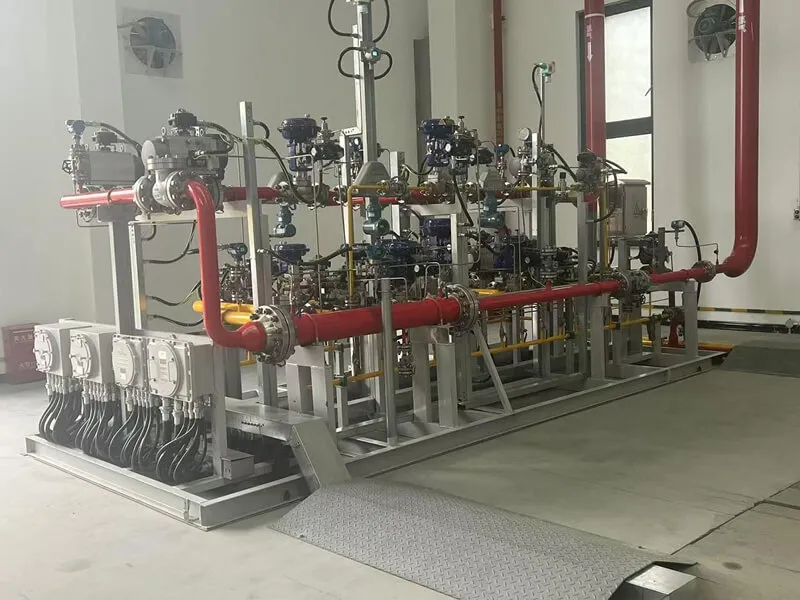
Equipment photographs
Tell us your gas, flow and pressure.
We come back with a configuration and quotation basis for your conditions.